Why Sustainable Business Growth Is the Future of Competitive Advantage

Sustainable business growth isn't just a buzzword—it's about building a resilient, profitable business that thrives long-term by balancing profit, people, and planet. The data is clear:
- Financial Performance: Companies with strong ESG practices deliver 2% higher annual shareholder returns.
- Customer Loyalty: 80% of consumers value sustainability, with half willing to pay a premium.
- Talent Attraction: 70% of employees prefer working for environmentally conscious companies.
- Investor Appeal: Nearly 80% of investors now consider sustainability factors.
- Risk Mitigation: Sustainable practices protect against penalties, reputational damage, and supply chain disruptions.
The old playbook of growth at all costs is failing. As climate change and resource scarcity become daily realities, companies ignoring their environmental and social impact face rising costs, talent shortages, and customers walking away.
But businesses integrating sustainability into their core strategy are winning. Unilever's sustainable brands grew 69% faster than their conventional products, and companies with science-based climate targets have seen over 100% annual growth.
Sustainable business growth means increasing profitability while reducing negative environmental and social impacts. It's about building efficient, scalable systems that make you more attractive to customers and investors and more resilient to market shifts.
For mid-sized businesses struggling with manual processes and inconsistent sales, sustainability is a solution. Streamlining operations and leveraging technology like cloud-based CRMs doesn't just cut costs—it reduces your environmental footprint. Fixing broken sales processes makes growth sustainable.
The challenge is knowing where to start. Many businesses are overwhelmed by jargon and worried about costs, stuck between rigid agencies and unreliable freelancers.
That's where the right operational support makes a difference. On-demand services like CRM optimization, sales process design, and custom visual sales assets help you build efficient, scalable systems for sustainable growth—without the bloat or long-term contracts.
I'm Ryan T. Murphy, founder of UpfrontOps. Over 12 years, I've helped 32 companies streamline operations and open up millions in revenue by building smarter systems—the foundation of sustainable business growth. This guide will show you how to implement practical strategies that drive both profitability and positive impact.
Sustainable business growth definitions:
The New Growth Paradigm: Shifting from Traditional to Sustainable Models
The traditional model of growth at any cost is obsolete. A new paradigm is emerging where sustainable business growth—balancing financial performance with environmental and social responsibility—is essential for competitive advantage.
Companies achieving "triple outperformance" in revenue, profit, and ESG progress deliver superior shareholder returns. For instance, these outperformers saw 2 percentage points higher annual Total Shareholder Return (TSR) than peers focused only on financials, proving that profit and purpose are intertwined.
This new model accepts "decoupling": expanding the economy while reducing resource consumption and pollution. Sustainability is no longer a cost but an investment that mitigates risk, attracts capital, and opens new markets. Ignoring it destroys value as demand shifts and regulations tighten.
Here's how traditional growth often stacks up against sustainable business growth:
| Metric | Traditional Growth Model | Sustainable Growth Model |
|---|
| Focus | Short-term profit, shareholder value | Long-term value for all stakeholders (People, Planet, Profit) |
| Time Horizon | Quarterly results, immediate returns | Multi-generational impact, future resilience |
| Key Metrics | Revenue, EBITDA, market share | Financials + ESG metrics (carbon footprint, employee well-being, ethical governance) |
| Resource Use | Maximize consumption, linear economy | Optimize efficiency, circular economy, resource regeneration |
| Risk View | Manage financial/market risks | Integrate environmental, social, governance risks |
| Innovation | Product/service differentiation | Eco-innovation, social innovation, systemic solutions |
| Competition | Zero-sum game | Collaborative, ecosystem-driven |
Key Principles of Sustainable Growth
Core principles guide sustainable strategies and operations:
- Long-term Perspective: Prioritizing enduring value over short-term gains by investing in resilience, employee well-being, and environmental stewardship.
- Stakeholder Capitalism: Creating value for all stakeholders—employees, customers, suppliers, and communities—to build trust and a supportive ecosystem.
- Resilience: Building the ability to adapt and recover from disruptions through diversification, flexible supply chains, and a culture of continuous learning.
- The 'Genius of the AND': Embracing the idea that a business can pursue growth and resilience, discipline and creativity, and financial success and positive societal impact.
- Innovation: Using sustainability as a driver for eco-friendly solutions, optimized processes, and circular models that create market differentiation.
- Efficiency: Doing more with less by optimizing energy, streamlining operations, and reducing waste to lower both environmental footprint and costs.
The Financial Case for Sustainable Business Growth
The financial benefits of sustainability are clear and powerful. Sustainable business growth is a key driver of profitability and long-term value.
- Increased Revenue: With half of consumers willing to pay a premium for sustainable products, purpose-driven brands see direct sales growth. Unilever's sustainable brands, for example, grew 69% faster than its other products.
- Improved Brand Loyalty: Aligning with customer values builds lasting relationships. Purpose-driven consumers, the largest market segment at 44%, are exceptionally loyal.
- Attracting Investment: Nearly 80% of investors now analyze ESG factors before investing, making companies with strong ESG metrics more attractive to capital.
- Cost Savings from Efficiency: Sustainable practices create operational efficiencies. Optimizing energy, waste management, and supply chains can significantly cut operating costs, with some companies saving hundreds of millions annually.
We understand that navigating these shifts can be complex, especially for businesses seeking to optimize their operations for both profit and purpose. That's why we offer specialized services to help you integrate these principles effectively. For more information on how we can support your journey towards sustainable business growth, explore our full range of services.
Core Drivers and Strategies for Sustainable Business Growth
Achieving sustainable business growth requires a multi-faceted approach driven by innovation, strategic expansion, and deep ESG integration.

Driving Growth Through Innovation and Efficiency
Innovation means creating new, more sustainable ways of doing business.
- Eco-friendly Product Design: Design products for their entire lifecycle, using renewable materials, ensuring durability, and maximizing recyclability and energy efficiency.
- Circular Economy Models: Move beyond the "take-make-dispose" model to reduce waste and maximize resource use. This can open up $4.5 trillion in economic value by 2030.
- Process Optimization: Streamline internal processes like logistics and energy use to cut resource consumption. On-demand operational support can identify bottlenecks and implement efficient workflows.
- Digital Change: Digitize processes with cloud solutions and automation to reduce paper, improve efficiency, and shrink your carbon footprint.
- On-demand Services: Use on-demand services for needs like CRM management or sales process design to scale capabilities efficiently, using resources precisely when needed to foster agility.
Integrating Environmental, Social, and Governance (ESG) Factors
ESG is the backbone of sustainable business growth, ensuring responsible and resilient operations.
- Green Procurement: Prioritize suppliers with strong sustainability credentials to reduce your supply chain's environmental footprint, which can account for 50–70% of emissions.
- Supply Chain Transparency: Build consumer trust and manage risk by knowing where your products come from and how they are made.
- Fair Labor Practices: Attract and retain top talent with fair hiring, safe working conditions, and equitable pay. 70% of employees prefer sustainable companies.
- Community Engagement: Strengthen your social license to operate through local partnerships, volunteerism, and addressing community needs.
- Corporate Governance: Ensure ethical decision-making, accountability, and transparent reporting with robust frameworks for ESG disclosure.
Strategic Partnerships and Market Expansion
Collaboration and smart market strategies can accelerate sustainable business growth.
- Collaborating with Non-profits: Partner with purpose-driven non-profits to amplify your impact and leverage specialized expertise.
- Partnering with Eco-conscious Suppliers: Work with sustainable suppliers to ensure your entire value chain reflects your values.
- Entering Green Markets: Capitalize on new opportunities in the green economy by developing low-carbon products and services.
- Coopetition: Collaborate with competitors on shared sustainability challenges to drive industry-wide innovation and progress.
Measuring What Matters: Technology, Reporting, and Overcoming SMB Challenges
To truly achieve sustainable business growth, we need to move beyond intentions to measurable impact. This requires leveraging technology, establishing robust reporting, and addressing the unique challenges faced by small and medium-sized businesses (SMBs).
The Role of Technology in Enabling Sustainability
Technology is a powerful enabler for tracking, analyzing, and improving sustainability performance.
- AI for Data Analysis: AI can analyze vast datasets on energy, waste, and supply chain efficiency to identify optimization opportunities invisible to the human eye.
- IoT for Energy Monitoring: Internet of Things (IoT) devices provide real-time data on energy usage, allowing for targeted savings from smart lighting to optimized HVAC systems.
- Cloud-based CRMs for Efficient Customer Management: Platforms like HubSpot streamline sales and marketing while enabling efficient customer management. Centralizing data and automating communications reduces paper waste and optimizes resources—a core part of our on-demand microservices.
- Automation to Reduce Resource Use: Automating repetitive tasks minimizes human error, speeds up processes, and reduces the physical resources required, from email campaigns to inventory management.
How to Measure and Report on Your Sustainable Business Growth
If you can't measure it, you can't manage it. Transparent reporting is crucial for building stakeholder trust.
- Key Performance Indicators (KPIs): Establish clear KPIs for environmental (energy use, carbon footprint), social (employee satisfaction, diversity), and economic (ROI of green initiatives) performance.
- Environmental Metrics (Carbon Footprint, Waste): Track carbon emissions, waste diversion rates, and resource consumption to identify areas for improvement and set reduction targets.
- Social Metrics (Employee Satisfaction): Measure employee satisfaction and turnover to gain insight into your social impact and the effectiveness of internal programs.
- Reporting Frameworks (GRI, SASB): Adhere to recognized frameworks like the Global Reporting Initiative (GRI) or SASB to ensure disclosures are comprehensive, comparable, and credible.
- Building Trust Through Transparency: Publicly reporting progress, challenges, and goals builds trust and reduces the risk of greenwashing accusations.
Accurate data is the foundation of effective reporting. Messy CRM data undermines your ability to track progress. Our on-demand experts can help you fix your CRM data quality problems, ensuring you have the clean, reliable data needed for robust reporting.
Overcoming Sustainability Problems for Small Businesses
SMBs face unique challenges when implementing sustainable practices, but solutions are available.
- Challenge: Limited Resources: SMBs often lack dedicated staff or large budgets.
- Solution: Start Small & Leverage On-Demand Support: Prioritize high-impact initiatives with quick wins. Instead of hiring full-time staff, use on-demand services for specific tasks like a sustainability audit or process optimization, providing expert support without the long-term cost.
- Challenge: Perceived High Costs: Many SMBs believe sustainability is too expensive.
- Solution: Focus on ROI & Explore Incentives: Many sustainable practices, like energy efficiency, offer a clear return on investment through lower operating costs. Also, research government grants, tax incentives, or rebates to offset upfront costs. Our on-demand support helps turn sustainability into a profit center.
Cultivating a Lasting Impact: Culture, Engagement, and Resilience
Sustainable business growth is not just about systems; it's rooted in our culture, leadership commitment, and employee engagement. Without a shared vision, even the best strategies can falter.
Fostering a Culture of Sustainability
A sustainable business integrates its values into its DNA, making it a natural part of how everyone thinks and acts.
- Leadership Buy-in: Sustainability must start at the top. When leaders champion sustainable practices and integrate them into strategic decisions, it sends a clear message throughout the organization.
- Employee Training and Education: Empower employees by educating them on the importance of sustainability for the business and the world, from waste reduction workshops to deep dives on ESG goals.
- Rewarding Sustainable Ideas: Encourage and reward employees for innovative ideas that contribute to sustainability, fostering a culture of continuous improvement.
- Integrating Sustainability into Company Values: When sustainability is a core value, it influences every decision, from product development to daily operations, shaping who you hire and how you collaborate.
At Upfront Operations, we believe that a strong company culture is essential for both operational excellence and sustainable business growth. We strive to create an environment where efficiency and purpose go hand-in-hand. You can learn more about our commitment to these values on our about page.
Navigating 'Sustainability Fatigue' and Ensuring Genuine Impact
The journey toward sustainability can be long, leading to "sustainability fatigue." It's crucial to ensure efforts lead to genuine, long-term growth.
- Avoiding Greenwashing: Be honest and transparent about your progress and challenges. Authenticity builds trust; making exaggerated or misleading claims erodes it.
- Combating Greenhushing: Don't underreport sustainability efforts out of fear of scrutiny. Transparently communicating genuine progress inspires others.
- Focusing on Authentic, Measurable Progress: Instead of chasing trends, focus on initiatives that deliver real, measurable impact for your business and stakeholders.
- Communicating Wins Transparently: Sharing successes, backed by data, energizes teams and reinforces the positive link between sustainability and business outcomes.
- Building Long-term Resilience: True sustainable business growth means building a business that can withstand future shocks through continuous adaptation, innovation, and proactive risk management.
Frequently Asked Questions about Sustainable Growth
What is the difference between sustainability and Corporate Social Responsibility (CSR)?
While related, sustainability and CSR have distinct focuses.
- CSR often refers to a company's separate initiatives to give back to society, such as charitable giving or community engagement. It's typically an addition to the core business.
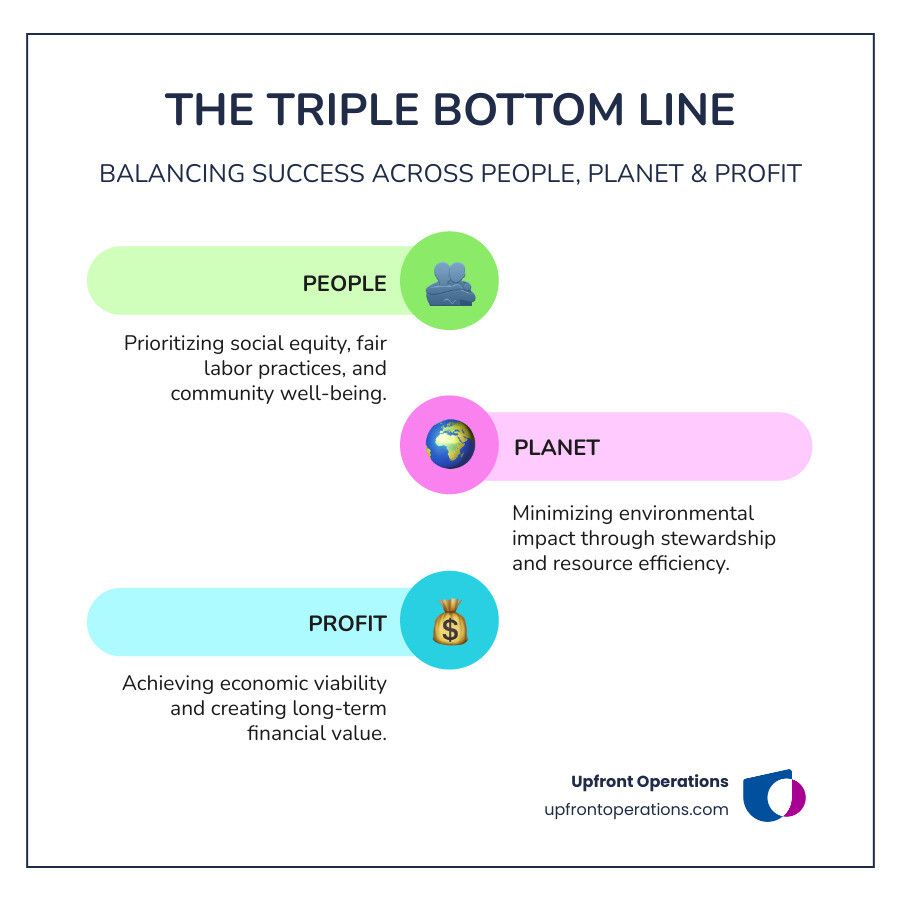
- Sustainability is more strategic and integrated. It involves designing the business model itself to balance the needs of the planet, people, and profit (the Triple Bottom Line) for long-term viability. It's about how a company creates value responsibly.
Can a small business truly afford to be sustainable?
Yes, absolutely. For small and medium-sized businesses (SMBs), sustainability is a source of competitive advantage and long-term savings, not just a cost.
- Cost Savings: Practices like energy efficiency, waste reduction, and digital optimization directly lower operating costs.
- Customer Appeal: With 80% of consumers valuing sustainability, it opens new markets and builds loyalty.
- Talent Attraction: A commitment to sustainability helps attract and retain top talent.
- Innovation: Sustainability can spark innovation in products and processes, creating market differentiation.
The key is to start strategically, focusing on high-impact areas that align with your business goals.
How do I start implementing sustainable practices with a limited budget?
Starting with a limited budget is feasible with a phased approach:
- Assess Your Impact: Conduct a simple audit to understand your current environmental and social footprint and identify areas for improvement.
- Set SMART Goals: Choose 1-3 specific, measurable, achievable, relevant, and time-bound goals, like "Reduce office energy use by 15% in one year."
- Focus on Low-Cost, High-Impact Actions:
- Energy & Waste: Switch to LED lighting, go paperless, and implement a recycling program.
- Digital Optimization: Use cloud-based tools and automation to reduce physical resource use. Our on-demand microservices, like CRM management, can help streamline operations efficiently.
- Supplier Engagement: Ask suppliers about their sustainability practices and prioritize those with strong credentials.
- Engage Your Team: Involve employees through training to raise awareness and encourage eco-friendly habits.
- Seek Support: Look for local grants or rebates. Consider on-demand operational support for expert help without the cost of a full-time hire.
Conclusion: Building a Future-Proof Business
The journey towards sustainable business growth is no longer optional—it's a strategic imperative for long-term success. Integrating environmental, social, and governance factors into your core strategy open ups revenue, attracts talent and investors, drives innovation, and builds resilience.
The principles are clear: balancing profit with people and planet leads to superior returns. By embracing innovation, optimizing for efficiency, and leveraging technology, you can transform your operations to be leaner, greener, and more competitive.
For businesses in New York and beyond, the path to sustainable business growth may seem daunting, but it doesn't have to be. Whether you need help streamlining your CRM, optimizing your sales pipeline, or implementing efficient operational microservices, our on-demand expertise provides exactly what you need, when you need it. We help you build robust systems that ensure your business is not just growing, but thriving sustainably.
Let's work together to build a future-proof business that delivers exceptional value to your bottom line and the world.
Explore our services to build a resilient, efficient operation.