Why Email Solutions Matter for Early-Stage Companies

Email solutions for startups are more than just a way to send messages—they're the foundation of professional communication, customer trust, and scalable growth. The right email setup can deliver an ROI of $36 for every $1 spent, making it one of the most powerful tools in your startup's arsenal.
Quick Answer: Top Email Solutions for Startups
| Solution Type | Best For | Key Benefits |
|---|
| Business Email (Zoho Mail, Microsoft 365, Google Workspace) | Professional communication | Custom domain (you@yourcompany.com), credibility, security |
| Email Marketing (Mailchimp, Brevo, HubSpot) | Customer engagement & growth | Automation, segmentation, analytics, free tiers available |
| Transactional Email (SendGrid, Postmark) | App notifications & receipts | High deliverability, API integration, developer-friendly |
| All-in-One Platforms (HubSpot, Zoho) | Integrated CRM & marketing | Unified customer data, sales alignment, automation workflows |
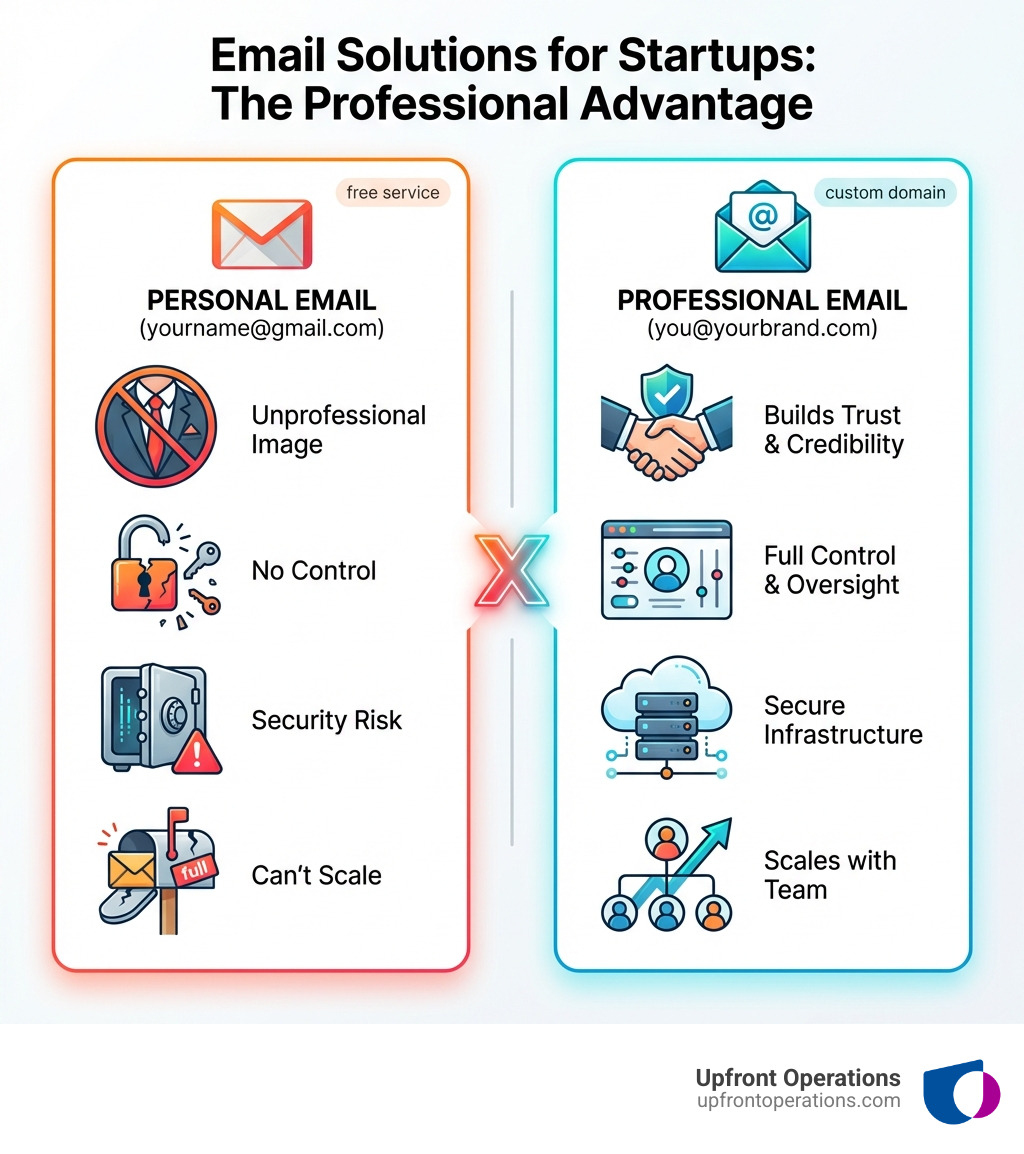
Using a personal Gmail or Yahoo address might seem convenient, but it creates real problems. You sacrifice professionalism, security, scalability, and control. Customers trust businesses with custom domain addresses (you@yourcompany.com) more than generic ones. Plus, you risk losing access to critical business communications if your personal account gets suspended or compromised.
The challenge isn't just choosing between free and paid options—it's finding the right balance of features, budget, and growth potential. Do you need basic business email, or full marketing automation? Should you prioritize deliverability, or focus on CRM integration first?
I'm Ryan T. Murphy, and over 12 years helping 32 companies streamline their operations, I've seen how the right email solutions for startups can transform customer engagement and open up millions in revenue. At UpfrontOps, we specialize in delivering these professional systems as on-demand microservices. We help growing businesses get set up with everything from custom domain configuration to marketing automation that actually drives conversions, all without long-term commitments.
Why Your Startup Needs a Professional Email Address
Imagine handing out a business card with an email address like "startupgenius2024@gmail.com." It might get a chuckle, but it certainly won't inspire confidence. Your email address is often the first impression a potential customer, partner, or investor has of your business. That's why professional email solutions for startups are non-negotiable.
When we talk about a professional email address, we mean one that uses your custom domain, like you@yourcompany.com. This isn't just about looking good; it's about building trust, enhancing your brand identity, and avoiding the numerous pitfalls of relying on personal email accounts. At Upfront Operations, we understand this critical need and offer on-demand business email setup services to get you started quickly and affordably. For more information on how we can help, explore our range of services.
From Credibility to Control: The Business Case
A custom domain email address instantly lifts your startup's perceived professionalism. It signals that you're a legitimate business, not just a hobbyist. This professional branding is crucial for building trust with your audience. When customers see support@yourbrand.com, they instinctively feel more secure and confident in your operations than if they were emailing yourname.startup@gmail.com.
Beyond credibility, a business email solution gives you immense control. We're talking about data ownership, which is paramount for any growing business. With a professional email service, you own your data, not a free provider that might have different terms of service. This also extends to control over user accounts. As your team grows, you can easily create and manage email addresses for new employees, ensuring marketing consistency and a unified brand voice. This level of control is simply not possible with personal email accounts, which are designed for one-to-one exchanges with friends and family, not managing professional contacts or team communications.
The Pitfalls of Using Personal Email for Business
While using a personal email for your startup might seem like a cost-saving measure, it's a false economy that can lead to significant problems.
One of the biggest concerns is security vulnerabilities. Personal email accounts are often less secure than dedicated business solutions and are prime targets for phishing and hacking attempts. If your personal account is compromised, you risk losing access to critical business communications, intellectual property, and sensitive customer data. Dedicated email solutions for startups offer robust security features like encryption-at-rest (AES-256) and encryption-in-transit (TLS), multi-factor authentication (MFA), and advanced spam and virus filters, which personal accounts typically lack.
Then there's the lack of scalability. What happens when your team grows from one to ten, or a hundred? Managing email addresses for multiple employees through personal accounts becomes a chaotic nightmare. Business email solutions are built for teams, allowing easy user management, shared inboxes, and collaborative tools.
Finally, the unprofessional appearance of a generic email address can damage your brand. It suggests you're not serious or established, which can deter potential clients and partners. Moreover, emails from generic addresses are more likely to land in spam folders, wasting your marketing efforts and hindering deliverability. We've seen startups lose valuable leads because their emails never even reached the inbox.
Key Features to Look for in Email Solutions for Startups
Choosing the right email solutions for startups requires a careful look at features that support both your daily operations and your ambitious growth plans. It's not just about sending and receiving; it's about efficiency, impact, and security.

When evaluating platforms, we advise our clients to prioritize custom domains, ease of use (because time is money for a startup!), strong integration capabilities with other tools like CRMs, robust automation features, and insightful analytics.
Core Functionality for Day-to-Day Operations
For everyday business, certain features are simply non-negotiable.
- Custom Domain Support: As we've discussed, this is foundational. Your email should reflect your brand (
you@yourcompany.com). - Ample Storage: You don't want to constantly delete emails. Solutions like Zoho Mail offer 5GB to 50GB per user, while some providers offer a default of 10GB with options to purchase more at predictable costs, like $3 per month per additional 10GB.
- Calendars & Contacts: Integrated calendars and contact management tools are essential for scheduling meetings and managing professional relationships. Zoho Mail, for instance, bundles these productivity tools, including notes and to-dos.
- Mobile Access: In today's world, accessing your email on the go via iPhone, Android, or any mobile device is crucial.
- Reliable Uptime: A service that's constantly down means missed opportunities. Look for guarantees like 99.99% uptime.
- Strong Security: This includes password-protected mailboxes, encryption (AES-256 for data at rest, TLS for data in transit), and protection against spam, viruses, phishing, and DDoS attacks. Some services even boast zero-knowledge architecture, meaning they can't access your mailboxes when not in use.
At Upfront Operations, we package these core functionalities into our on-demand Business Email Setup service, ensuring your team has everything it needs to communicate professionally without the overhead. Find how our features can empower your startup.
Growth-Oriented Features: Email Marketing & Automation
As your startup grows, your email strategy needs to move beyond simple communication to proactive customer engagement and lead nurturing. This is where specialized email marketing features come into play.
- Drag-and-Drop Editor & Templates: Easy-to-use email builders and pre-designed templates allow anyone on your team to create professional-looking emails without needing design skills.
- Segmentation: The ability to divide your email list into targeted groups based on demographics, behavior, or engagement levels is powerful. This ensures your messages are relevant, increasing engagement and conversion rates.
- A/B Testing: Optimize your subject lines, content, and calls-to-action by testing different versions to see what resonates best with your audience.
- Automation Workflows: Set up automated sequences for welcome emails, abandoned cart reminders, lead nurturing, and re-engagement campaigns. This saves time and ensures consistent communication. Brevo and HubSpot are examples of platforms offering robust automation, with some even providing AI-powered options like Mailmodo.
- Landing Pages: Some email marketing services, like MailerLite and GetResponse, include landing page builders, allowing you to capture leads directly.
- CRM Integration: Seamless integration with your Customer Relationship Management (CRM) system is vital. This centralizes customer data, allowing for highly personalized communication and better alignment between your sales and marketing efforts. HubSpot is a prime example of a platform that excels in this area.
- Transactional Emails: For e-commerce or SaaS startups, sending automated transactional emails (like order confirmations, password resets, or shipping notifications) reliably is critical. Services like SendGrid, Postmark, and Mailtrap specialize in high-volume, high-deliverability transactional email.
Security, Privacy, and Deliverability Essentials
For any startup, especially those in New York handling sensitive customer data, security, privacy, and deliverability are paramount.
- Two-Factor Authentication (2FA): An extra layer of security that requires a second verification step, significantly reducing unauthorized access.
- Encryption (TLS, AES-256): Ensures your emails are secure both when they're stored (at rest) and when they're traveling across the internet (in transit).
- Spam Filtering: Robust filters protect your inbox from unwanted junk and prevent your outgoing emails from being flagged as spam.
- SPF, DKIM, DMARC: These are email authentication protocols that verify your emails are legitimate and coming from your authorized domain. Implementing them is crucial for protecting your sender reputation and ensuring your emails reach their intended recipients. Mailtrap, for instance, emphasizes these for over 90% inbox placement.
- Data Privacy Compliance (GDPR, CCPA): Ensure your chosen solution complies with relevant data protection regulations, especially if you deal with customers in different regions.
- High Deliverability Rates: What's the point of sending emails if they don't reach the inbox? Look for providers with a proven track record of high deliverability, often supported by features like proactive ISP outreach and compliance coaching (e.g., SendGrid).
Free vs. Paid: Choosing the Right Email Solution for Your Budget
The classic startup dilemma: how much should you pay for essential services? When it comes to email solutions for startups, the free vs. paid debate is alive and well. Many services offer attractive freemium models, allowing you to start without upfront costs. However, it's crucial to understand the trade-offs.
Free plans often come with subscriber limits, sending limits, and feature restrictions. You might also find your emails branded with the provider's logo, which isn't ideal for projecting a professional image. As your startup grows, these limitations can quickly become bottlenecks. We encourage our clients to consider their long-term growth when making these decisions. For detailed pricing on our on-demand services, check our pricing page.
The Best Free Email Solutions for Startups and Their Limits
For bootstrapped startups, free email marketing services can be a fantastic way to get started. They allow you to test strategies, build your initial audience, and learn the ropes without breaking the bank. Here's a snapshot of some popular options and their typical limitations:
- Mailchimp: Allows up to 500 subscribers and 1,000 emails per month (with a daily limit of 500). While historically generous, its free tier has become more restrictive.
- Brevo (formerly Sendinblue): Offers a free plan for up to 100,000 subscribers and 9,000 emails per month, with a daily limit of 300. This is quite generous for email volume.
- HubSpot: Its free plan allows for up to 1 million contacts but has a monthly sending limit of 2,000 emails. It also includes CRM features, which is a huge plus.
- MailerLite: Provides a free plan for up to 500 subscribers and 12,000 emails per month, offering a good balance for early-stage list building.
- Zoho Campaigns: Allows for 2,000 contacts and 6,000 emails per month on its free plan.
Common limitations across these free plans include:
- Subscriber and Sending Caps: You'll hit a wall as your list grows.
- Feature Restrictions: Advanced automation, A/B testing, and detailed analytics are often reserved for paid tiers.
- Provider Branding: Your emails might feature a "Powered by [Service Name]" badge.
- Limited Support: Free users typically receive basic or community-based support.
These free options are excellent for getting started, but remember, they're designed to entice you to upgrade.
When to Invest: The Advantages of Paid Email Solutions
As your startup gains traction, investing in a paid email solution for startups becomes a strategic necessity. The advantages far outweigh the costs, especially considering email marketing's impressive ROI.
- Removing Provider Branding: A clean, branded email without "Powered by..." improves your professional image and builds trust.
- Higher Sending Limits & Unlimited Subscribers: Paid plans scale with your growth, allowing you to send more emails to a larger audience without worrying about caps.
- Advanced Automation & Analytics: Open up sophisticated workflows, deeper segmentation, comprehensive reporting, and A/B testing to optimize your campaigns and truly understand your audience.
- Dedicated Support: Access to priority customer support, often including phone and chat options, is invaluable when you face a critical issue. SendGrid, for example, offers 24/7 critical incident support.
- Better Deliverability: Paid services typically offer more robust deliverability tools, including dedicated IP addresses, advanced authentication, and proactive monitoring, ensuring your emails land in the inbox.
- Scalability for Growth: A paid solution is built to grow with you, offering the infrastructure and features you need as your operations expand. This ensures continuity and avoids the headache of migrating services frequently.
Building Your Strategy: From First Email to Full-Fledged Funnel
Email isn't just a communication tool; it's a powerful engine for growth and customer engagement. For startups, an effective email strategy can drive conversions, build community, and foster customer loyalty.
At Upfront Operations, we help our clients design email marketing strategies that align with their business goals, from building a quality list to measuring the ROI of every campaign. Email marketing delivers a staggering $36 for every $1 spent—you can't afford to ignore it!
Essential elements of an email marketing strategy for new businesses
Starting with a clear strategy is key. Here's what we recommend for new businesses:
- Defining Goals: What do you want your email marketing to achieve? Lead generation, sales, customer retention, brand awareness? Clear goals will shape your content and campaigns.
- Identifying Target Audience: Who are you trying to reach? Understanding your audience's pain points, interests, and preferences allows for highly personalized and effective communication.
- Building a Quality List: Focus on organic growth through lead magnets (e.g., free guides, webinars), website sign-up forms, and social media. Quality over quantity always wins.
- Content Planning: Develop a content calendar that offers value to your subscribers. This could include educational content, product updates, exclusive offers, or behind-the-scenes insights.
- Welcome Email Automation: Your welcome series is your first impression. Automate a sequence of emails to introduce your brand, set expectations, and guide new subscribers to their next step.
- Performance Tracking: Regularly monitor key metrics like open rates, click-through rates, conversion rates, and unsubscribe rates. This data is crucial for optimizing your strategy.
The Role of CRM and Automation in Your Email Strategy
For startups, efficiency is everything. This is where CRM (Customer Relationship Management) and automation become your best friends.
- Centralizing Customer Data: A CRM like HubSpot or Zoho acts as a single source of truth for all your customer interactions. This means your email marketing efforts are informed by real-time data on customer behavior, purchase history, and preferences.
- Automating Repetitive Tasks: Automation workflows save countless hours. Imagine automatically sending a welcome email when someone signs up, a follow-up email after a download, or an abandoned cart reminder. Platforms like Brevo and HubSpot excel here, allowing you to set up recurring campaigns without manual intervention.
- Personalizing Communication at Scale: With CRM integration and automation, you can send highly personalized emails to thousands of subscribers. Tailoring messages based on customer segments or individual behaviors makes your communication more relevant and impactful.
- Lead Scoring: CRMs often include lead scoring capabilities, which assign points to leads based on their engagement and fit. This helps your sales team prioritize the most promising leads for follow-up.
- Aligning Sales and Marketing: When your CRM and email marketing work together, your sales and marketing teams are on the same page. Marketing can nurture leads until they're sales-ready, and sales has all the context they need for their outreach. This seamless integration, often facilitated by tools like Zapier, is a game-changer for startups.
Frequently Asked Questions about Startup Email
We often get asked similar questions from startups navigating the complex world of email solutions. Here are some of the most common ones:
The best email solutions for startups often depend on your specific industry needs.
- E-commerce: If you're selling products online, look for platforms with strong e-commerce integrations. Features like abandoned cart emails, product recommendations, and post-purchase follow-ups are crucial. Omnisend and SmartrMail, for example, offer powerful free e-commerce solutions custom for online stores.
- Content Creators & Bloggers: For those focused on newsletters and building a community around content, platforms that prioritize ease of content creation, monetization features, and audience engagement are key. Kit and Beehiiv are excellent choices for newsletter creators, often offering generous free plans.
- SaaS (Software as a Service): SaaS startups need robust transactional email capabilities for user onboarding, password resets, and in-app notifications. High deliverability and API integration are paramount. Services like Mailtrap, Postmark, and SendGrid are built for this, ensuring critical emails reach users reliably. Onboarding sequences and user activation campaigns are also vital for SaaS growth.
How do I migrate my existing email data to a new service?
Migrating email data can seem daunting, but modern email solutions for startups make it relatively straightforward.
- Identify Data to Migrate: Typically, you'll want to move contacts, email history, and sometimes calendars and tasks.
- Check Provider Tools: Many email providers, like Zoho Mail, offer built-in migration tools that simplify the process. These tools can often import data directly from other popular services.
- Export Data: If direct migration isn't available, you can usually export your data in common formats like CSV (for contacts) or PST (for emails from Outlook).
- Use Dedicated Support: For larger or more complex migrations, some providers offer dedicated support to guide you through the process, ensuring no data is lost. We also assist our clients with seamless data migration as part of our on-demand services.
It's a good practice to back up your data before starting any migration.
How can I ensure my emails don't land in the spam folder?
Email deliverability is one of the most critical aspects of your email strategy. What's the point of crafting a perfect email if it never reaches the inbox? Here's how to ensure your emails avoid the dreaded spam folder:
- Maintain a Strong Sender Reputation: Your sender reputation is like a credit score for your email. Send consistent, valuable emails, and avoid high bounce rates or spam complaints.
- Implement Email Authentication (SPF, DKIM, DMARC): These technical configurations verify that your emails are legitimate and prevent spoofing. Most professional email services guide you through setting these up.
- Keep Your Email Lists Clean: Regularly remove inactive subscribers, bounced addresses, and those who have unsubscribed. A clean list signals to ISPs that you're a responsible sender.
- Avoid Spammy Words and Practices: Don't use excessive exclamation points, all caps, or phrases commonly associated with spam. Also, avoid sending emails with only images and no text.
- Provide a Clear Unsubscribe Link: This is not just a legal requirement (e.g., CAN-SPAM, GDPR); it's also a best practice. Making it easy for people to opt out reduces spam complaints.
- Send Valuable Content: The best way to stay out of the spam folder is to send emails that your subscribers genuinely want to receive and engage with.
Conclusion: Choosing the Right Email Solution to Scale Your Startup
Navigating email solutions for startups can feel overwhelming, but by focusing on your core needs and future growth, you can make an informed decision. We've seen how crucial professional email is for establishing credibility, building trust, and driving customer engagement. From custom domains and robust security to advanced marketing automation and deliverability, the right solution acts as an unseen engine powering your startup's momentum.
Whether you're just starting with a free plan or ready to invest in a comprehensive paid solution, remember to prioritize:
- Professionalism: Always opt for a custom domain email.
- Features: Choose features that align with your current needs and future growth.
- Cost-effectiveness: Balance budget with the value and scalability offered.
- Security & Privacy: Protect your data and your customers' information.
- Deliverability: Ensure your messages reach their intended audience.
At Upfront Operations in New York, we believe in delivering essential and simple microservices on-demand, just like business email setup for small businesses and solopreneurs. We're here to help you move beyond generic email, scale your operations, and focus on what you do best: building a business.
Ready to professionalize your communications and boost your growth? Get started with our on-demand services today.