February 12, 2026

10
min read
Mastering Sales Ops: The Ultimate Playbook for Success
Boost sales with proven best practices for sales operations. Optimize strategy, data, and tech for ultimate revenue growth...
Boost sales with proven best practices for sales operations. Optimize strategy, data, and tech for ultimate revenue growth...


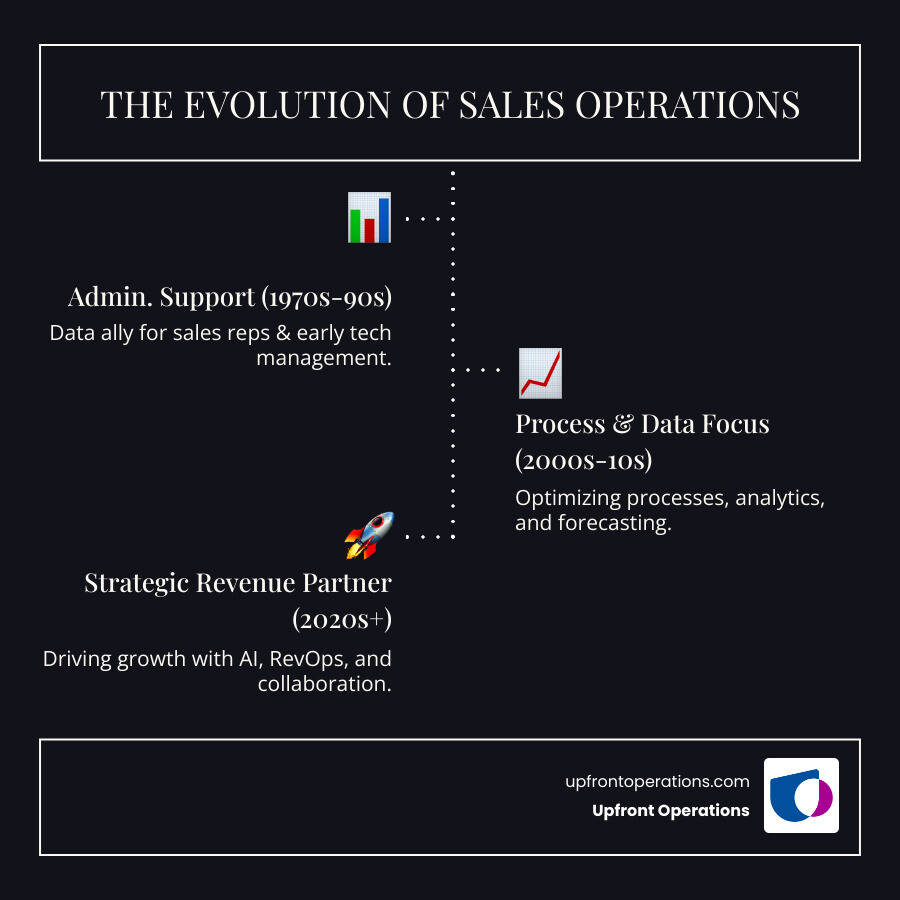
Best practices for sales operations are no longer optional—they are the difference between companies that scale predictably and those that struggle with missed targets, seller burnout, and inconsistent revenue. In today's competitive landscape, sales operations has evolved from an administrative support function into a strategic powerhouse that drives measurable business outcomes. Organizations that leverage Sales Ops effectively see 3× higher revenue growth than companies without a dedicated team, along with 20-30% higher sales productivity compared to their peers.
Key best practices for sales operations include:
Yet many mid-sized businesses struggle with the reality: sellers are burning out (nearly 9 out of 10 report burnout, with 54% actively seeking new jobs), targets are being missed, and manual processes are consuming time that should be spent selling. The root cause isn't a lack of effort—it's the absence of a structured sales operations framework.
Imagine running a business where orders fly in from multiple channels—phone calls, emails, online forms—each landing in a different pile, demanding manual entry. Inventory needs separate updates. Customers are left in the dark. This chaos is painstaking and costly. But what if you implemented a unified system? Streamlining and integrating commercial functions through sales operations can automate order processing, update inventory in real-time, and seamlessly communicate with customers throughout their journey. The result: improved efficiency, reduced errors, and a cohesive customer experience.
Sales operations teams can improve sales cycle efficiency by 25% and reduce wasted lead follow-ups by 40%. Companies with strong sales operations functions experience 38% higher win rates when sales and marketing are properly aligned. These aren't incremental improvements—they're transformative shifts that separate market leaders from laggards.
I'm Ryan T. Murphy, founder of Upfront Operations, and over the past 12 years I've helped 32 companies implement best practices for sales operations that shortened sales cycles by up to 28% and open uped millions in new revenue. Through on-demand services like fractional sales operations support, CRM management, and workflow automation, we help businesses scale without the overhead of full-time hires.
Terms related to best practices for sales operations:

This section will detail the core pillars for building a successful sales operations function from the ground up. Think of it as laying the groundwork for a skyscraper—you wouldn't start building without a solid foundation, would you?
At its heart, sales operations is about strategy. We need to ensure that our sales strategy is not just a standalone plan, but a fully integrated component of the company's overarching vision. This means engaging in Sales and Operations Planning (S&OP), a crucial process for aligning supply and demand across the business. We set clear, measurable goals for the sales team that directly contribute to the company's larger objectives.
This pillar also encompasses territory management, ensuring sales resources are allocated efficiently to maximize market coverage and potential. A significant responsibility here is sales forecasting. Gone are the days of gut feelings; modern sales operations leverages historical data, market trends, and even AI-driven forecasting to predict future sales with remarkable accuracy. This improved forecasting helps us allocate resources effectively and adjust strategies proactively. For example, AI-driven forecasting has been shown to improve quota accuracy by 3x. Finally, quota setting, often a contentious area, becomes a data-backed exercise, ensuring fairness and motivating our sales force.
Imagine a well-oiled machine where every gear turns in perfect synchronicity. That's what we aim for with standardized and optimized sales processes. This involves meticulous process mapping, visually documenting every step of the sales cycle from lead generation to post-sale follow-up. By doing so, we identify bottlenecks, redundancies, and areas ripe for improvement.
Workflow automation is our secret weapon here. By automating repetitive administrative tasks, we're not just saving time; we're increasing selling time for our reps by 30% or more. This directly contributes to a significant improvement in sales cycle efficiency—organizations with structured Sales Ops functions can boost efficiency by 25% and reduce wasted lead follow-ups by 40%. Our focus remains customer-centric, ensuring that every process, from order processing to lead management, is streamlined and aligned with the customer's journey. This creates a smoother, more satisfying experience for them, and a more predictable, profitable process for us.
For businesses looking to refine their processes, our on-demand services can provide the exact support needed to map, optimize, and automate these critical workflows.
Data, data everywhere, but not a drop to drink? Not on our watch! One of the most crucial best practices for sales operations is creating a single source of truth and cultivating a data-driven culture. This begins with impeccable data hygiene, ensuring our data is accurate, consistent, and up-to-date across all platforms. We know that 58% of sales ops professionals struggle with finding accurate data due to silos, which is why centralizing data is paramount.
We work to improve data literacy across the organization, helping everyone understand the purpose, sources, definitions, and interpretation of our metrics. This builds confidence in our data and forecasts, moving decisions from intuition to evidence. The ROI of sales analytics is significantly higher than expected for 42% of respondents, proving that investing in data insights pays off. By changing raw numbers into actionable insights, we empower our sales leaders and reps to make smarter decisions, anticipate customer needs, and craft personalized pitches that resonate.

A sales operations function is only as strong as the team behind it. Building a high-impact team means carefully defining roles and responsibilities. Typically, a Sales Ops team might include Sales Operations Analysts, who are problem-solvers with a keen eye for data, and Sales Operations Managers, who bring years of experience to strategy and execution. The required skills are diverse, ranging from data analysis and technical proficiency to strong communication and relationship-building capabilities.
Talent acquisition in this specialized field can be challenging, with 36% of sales ops professionals reporting difficulty recruiting and retaining good hires. This is where the concept of on-demand support and fractional sales operations experts shines. For larger companies, engaging fractional sales operations experts means getting elite expertise without the overhead of a full-time hire, allowing for scalable support custom to specific needs. For smaller businesses and solopreneurs, this means access to the same high-level strategic guidance that larger enterprises enjoy, ensuring their sales engine is always running optimally.
Our sales operations tech stack is our arsenal. CRM mastery is foundational, as systems like Salesforce or HubSpot centralize customer information, streamline workflows, and improve predictive analytics. Automation tools reduce manual errors and bottlenecks, freeing up our team for higher-value activities. Analytics platforms, like Tableau or Clari, turn raw data into powerful insights, helping us monitor performance and identify trends. CPQ (Configure, Price, Quote) software cuts quote turnaround time by 60% and can increase conversion rates by up to 17%, accelerating deal execution.
However, we must avoid tech overload. Too many disparate tools can lead to fragmentation and underutilization. Our approach is strategic: select, implement, and optimize tools that truly empower our teams. For those needing ongoing support, on-demand CRM management ensures our systems are always running smoothly. And for solopreneurs just starting out, foundational microservices like a professional website and business email are often the first, crucial steps to establishing a credible and efficient sales presence.
This section explores how to lift a functional Sales Ops team into a true organizational powerhouse through integration and performance tracking. It's about moving beyond simply supporting sales to actively driving the entire revenue engine.
It's easy to confuse sales operations and sales enablement, but understanding their distinct yet complementary roles is key to maximizing their impact. Sales operations is the strategic backbone, handling the planning, analytics, CRM management, forecasting, and internal processes. It's about optimizing the how of selling. Sales enablement, on the other hand, is dedicated to empowering sales professionals directly through training, content, tools, and strategies for improving conversations and conversions. It's about optimizing the what and who of selling.
Defining these roles clearly, clarifying responsibilities, and fostering a strong collaboration model ensures they work in harmony towards shared goals. Sales ops provides the data and infrastructure, while sales enablement leverages these to equip reps with the necessary resources and training. This symbiotic relationship ensures our sales force is not only efficient but also highly effective.
| Feature | Sales Operations | Sales Enablement |
|---|---|---|
| Primary Focus | Strategic planning, process optimization, data, tech | Rep empowerment, training, content, tools |
| Core Function | Optimizing the how of selling (systemic) | Optimizing the what and who of selling (rep-centric) |
| Key Activities | Forecasting, CRM management, territory design, KPIs | Sales playbooks, product training, content creation, coaching |
| Goal | Increase efficiency, predictability, revenue growth | Improve rep performance, conversion rates, buyer experience |
| Impact | Structural, systemic | Individual rep, tactical |
No department is an island, especially not sales operations. A critical aspect of best practices for sales operations is fostering cross-departmental synergy. We act as a central hub, breaking down silos and aligning with other key departments like Marketing, Finance, and Product. This collaboration isn't just about being friendly; it's about achieving tangible results. For instance, companies with strong sales operations functions achieve 38% higher win rates when sales and marketing are aligned.
Sales operations functions commonly support marketing departments (57%), product departments (38%), and finance departments (35%). By establishing clear Service Level Agreements (SLAs) and ensuring seamless lead handoffs, we create a unified front that improves the overall customer journey and accelerates revenue generation. This means regular meetings, integrated platforms, and a shared understanding of objectives across the organization.
How do we know if our sales operations are truly successful? By measuring it, of course! We track a comprehensive set of metrics and Key Performance Indicators (KPIs) that fall into two main categories: Performance Metrics and Efficiency Metrics. These metrics provide a clear scorecard of our effectiveness and highlight areas for continuous improvement.
Core metrics we obsess over include:
By consistently tracking and analyzing these KPIs, we gain valuable insights into what's working, what's not, and how we can continuously optimize our sales engine.
Top 10 Sales Operations KPIs to Track:
The landscape of sales is constantly evolving, and Sales Ops must lead the charge in adopting new technologies and methodologies to stay competitive. We're not just reacting to change; we're anticipating it and shaping our strategies accordingly.
The future of sales operations is exciting and driven by several key trends:
The primary goal of a sales operations team is to increase sales productivity and drive revenue growth by optimizing processes, leveraging technology, and providing data-driven insights to the sales organization. We aim to make selling easier, faster, and more effective for our sales professionals.
By making the sales team more efficient and effective, Sales Ops directly impacts revenue. We shorten sales cycles, improve win rates, and provide accurate forecasting, which allows the entire business to plan and grow more predictably. Our work ensures that the sales engine is running at peak performance, translating directly into increased market share and profitability.
The first steps are crucial. Start by defining a clear strategy, aligning it with your overall business goals. Even if you're a small business, assign a leader (or bring in a fractional expert) to champion the effort. Identify the key pain points in your current sales process—where are reps struggling, or where are deals getting stuck? Finally, select a core set of metrics to track improvement from the outset. This foundational work will set you up for long-term success.
We've journeyed through the intricate world of sales operations, finding how its foundational best practices—from strategic planning and process optimization to data-driven cultures and high-impact teams—are essential for modern business success. We've also explored advanced strategies like symbiotic collaboration with sales enablement, driving cross-departmental synergy, and carefully measuring our impact with key KPIs.
Sales operations is not just a support function; it's a strategic growth engine. It's about creating a frictionless sales process, empowering your team, and achieving predictable revenue growth. In a market where efficiency and foresight are paramount, mastering sales operations is your undeniable competitive advantage.
At Upfront Operations, we understand the nuances of building and optimizing these systems. Whether you're a solopreneur needing foundational microservices like a professional website and business email to get started, or a larger enterprise seeking to optimize your CRM management, lead nurturing, and pipeline with fractional sales operations experts, we're here to help. To see how our on-demand experts can transform your sales engine, explore our on-demand services.